

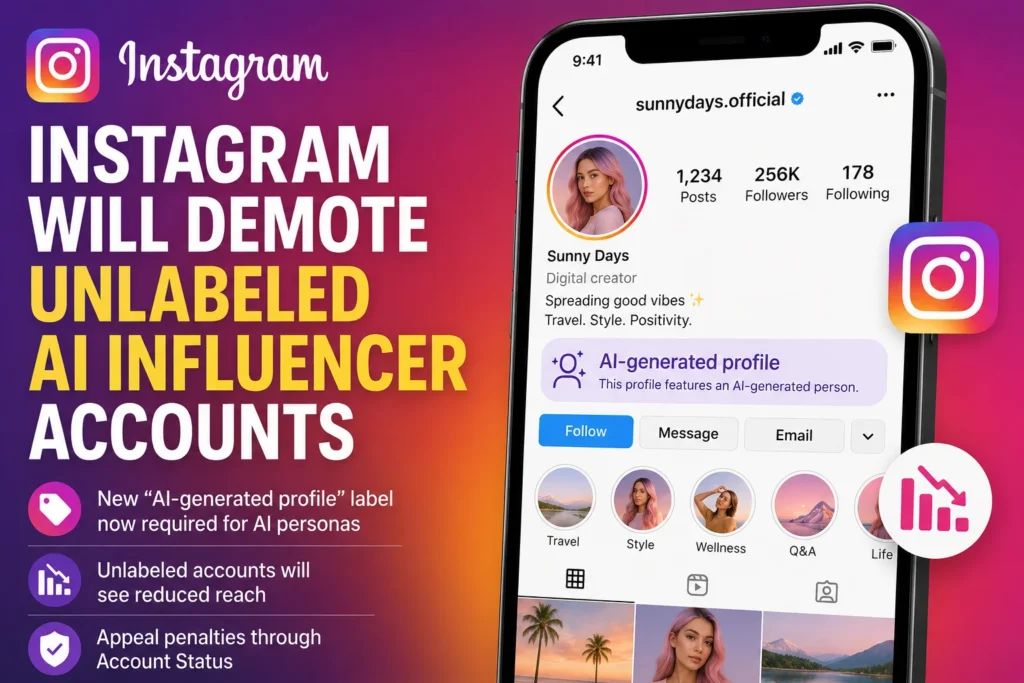
Instagram is introducing a new labeling requirement for profiles built around AI-generated personas. Accounts that feature an AI-generated person without disclosing it will now see their reach reduced, the company confirmed, as social platforms face growing pressure to address misleading AI content.
What the New Policy Requires
Instagram is rolling out a new “AI-generated profile” label, replacing its previous optional “AI creator” tag, which had functioned as a broad catch-all for any account regularly featuring AI content. The new label is specifically intended for profiles that “feature an AI-generated person,” according to its in-app description, rather than covering AI use more broadly.
Accounts that feature an AI-generated persona without applying the label will see their reach reduced. “We’ve heard from our community that they don’t like coming across a profile that seems human, only to find out later that the person featured is AI-generated,” an Instagram spokesperson said. Creators who believe they were wrongfully penalized can appeal through Instagram’s Account Status dashboard.
Why Instagram Is Making This Change Now
The policy responds to a documented rise in fake AI-generated “influencers” over the past year. The Guardian recently uncovered a wave of AI-generated influencers being used to promote apps and other brands, while The New York Times found hundreds of AI “wellness” influencers, including accounts falsely presenting themselves as doctors. Much of this content hasn’t technically violated Meta’s existing rules, but it has fueled growing concern about AI-driven misinformation on the platform.
What This Policy Doesn’t Cover
It’s worth being clear about the limits of this change. This is not a broad crackdown on AI-generated content across Instagram, only a labeling requirement specifically for accounts built around a fabricated AI persona presented as a real person. Meta has otherwise done comparatively little to discourage AI content on its platforms more broadly, and has separately built features encouraging users to create their own AI-generated content elsewhere in its apps. In other words, the policy targets a specific, identity-based form of deception rather than “AI slop” content in general.
Why It Matters
For everyday users, the labeling requirement offers a more reliable way to distinguish real people from AI-generated personas, directly addressing a documented pattern of deceptive marketing and misinformation, particularly in sensitive categories like health and wellness content. For creators and brands running AI-persona accounts, non-compliance now carries a concrete algorithmic penalty rather than just a policy guideline, giving the rule real enforcement teeth. The move also reflects a broader industry trend: platforms including Spotify have introduced similar AI-disclosure requirements this year, suggesting labeling AI-generated identities, if not all AI content, is becoming a standard expectation across major consumer platforms.
What Happens Next
Instagram says the reach reduction for unlabeled AI-persona accounts is already in effect, with an appeals process available for creators who believe they were flagged in error. Given the scale of AI-generated influencer content documented by outside reporting, enforcement consistency will likely be the key factor in how effective this policy proves to be in practice.
For continuing coverage of AI content policy and social media platform changes, keep following Tech News Reports for ongoing updates.


